
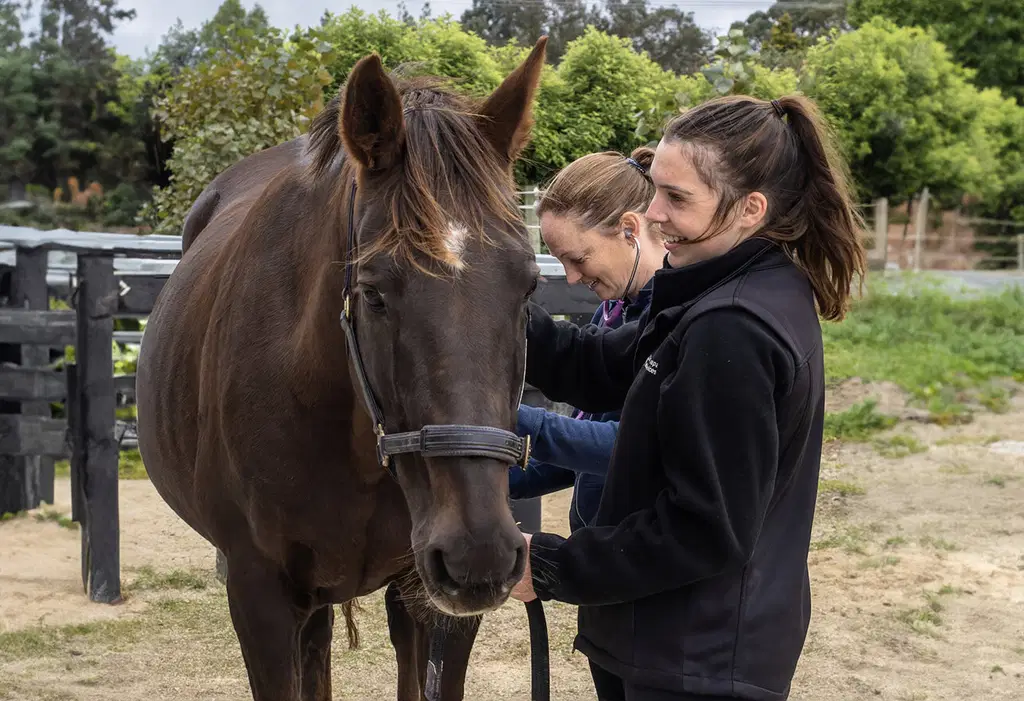
Senior equine wellness checks now available
We've been delighted to have Equine Internal Medicine Specialist Sarah Mack working with us over the last few months to provide senior horse wellness checks. Having previously been part of the South Wairarapa Veterinary Services’ team, Sarah was happy to be back among familiar faces. Here, she shares what owners of senior horses need to consider, and why annual veterinary check-ups are so essential.
· Older horses are prone to dental disease, so it’s important you book in for a yearly dental exam with a veterinarian. If there is evidence of disease, owners may start to notice their horse has trouble dropping food when they are eating. A vet will also pick up on disease in the mouth that owners may not notice. If the horse can’t eat, they are at risk of losing weight, which can cause equine colic, so speak with your veterinarian if you notice your horse has difficulty chewing.
· Arthritis is a big problem for senior horses, and it can be incredibly painful. The good news is there are plenty of pain relief options and supplements available to help manage the condition. The equine team has an information sheet about arthritis in senior horses that they are happy to email clients, so get in touch if you’d like to know more.
· Being a little longer in the tooth can also pre-dispose horses to heart issues, such as aortic regurgitation. This is important to consider if you are riding older horses, in which case we would recommend a check-up with a veterinarian once a year as a minimum.
· Certain eye conditions and weight loss can be tied to Equine Cushing’s Disease. However, often older horses do require more general nutritional support and they may be missing out on certain vitamins and minerals through their diet. If you are concerned that your horse is having eye issues or has lost weight, seek advice from your veterinarian.
As part of your annual equine check-in, the equine veterinary team can look for parasites, monitor worm counts, and provide general wellness checks and advice. You can either book in and bring your horse to see us, or we can visit you at your own property, so give us a call to make an appointment.
Share on