
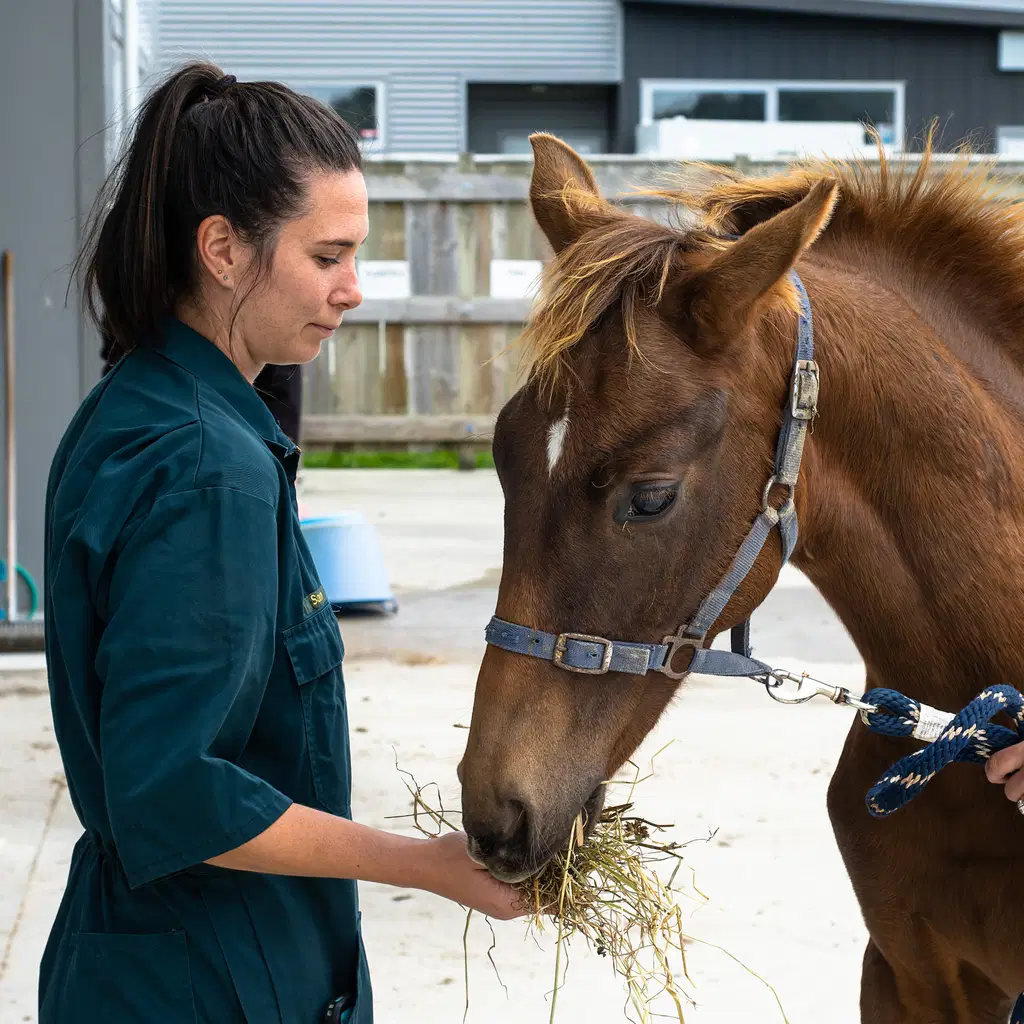
Getting it right when it comes to your horse's diet and nutritional intake
Balancing the nutritional needs in horses and ponies
Making sure your horses are getting all the nutrients they need can be quite complicated as dietary needs will differ depending on the animal's age, health, and lifestyle requirements. Equine Veterinarian, Sam Perko, says horses, ponies, and donkeys can benefit from tailored nutritional advice from a veterinarian, based on:
Their level of performance
If they are young and growing (<3 years old)
If mares are pregnant and lactating
If they are laminitic or insulin-resistant
Whether they have history of tying up or stomach ulcers
And, if they are underweight or overweight
In general, most horses need to be fed 1.5% to 2% of their body weight in dry matter, each day, Sam says.
"Differing foods will have different dry matter values and often feeds and grass can have more carbohydrates than is actually required," she says. "Fibre should make up the majority of the daily diet, with grain feeds only needed in some cases. Feeding mineral mixes without the calories can be a great alternative for those struggling to keep weight off their horses and ponies, whilst ensuring they receive their required minerals and vitamins."
Any changes to a horse's diet should always be introduced slowly. It's also important to be mindful of grass intake as the make-up of grass can change daily, making it a very variable nutritional source for horses. Sam says hay and feed-only diets can provide a more consistent diet with less carbohydrates, protein, and mineral fluctuations, however, it may not suit every horse and pony, so discuss this with your veterinarian. The supplement world is full of various products and claims, so always do your research before introducing something new into your horse's diet.
Sam says hay and feed-only diets can provide a much more consistent diet with less carbohydrates, protein, and mineral fluctuations, however, it may not suit every horse and pony, so discuss this with your veterinarian.
How can we help?
The South Wairarapa Veterinary Services' equine team can run blood tests to measure trace elements, such as magnesium and selenium, to see if nutritional needs are being met through the horse's current diet. We can discuss the appropriate supplementation if required.
We can provide advice on the feed types and supplements with better efficacy or absorption rates.
For a fee of just $5, we can weigh horses on our purpose-built scales. This helps us to monitor weight loss or gain and allows us to calculate their recommended intake.
We can visit properties to do Body Condition Scoring and teach owners how to monitor and keep their horse and pony in a healthy condition.
We can also provide advice about the most appropriate diets for horses and ponies with specific issues, such as laminitis, tying up, and insulin resistance.
For more information, give our equine team a call on 06 377 0461, or email: equine@swvets.co.nz
Share on